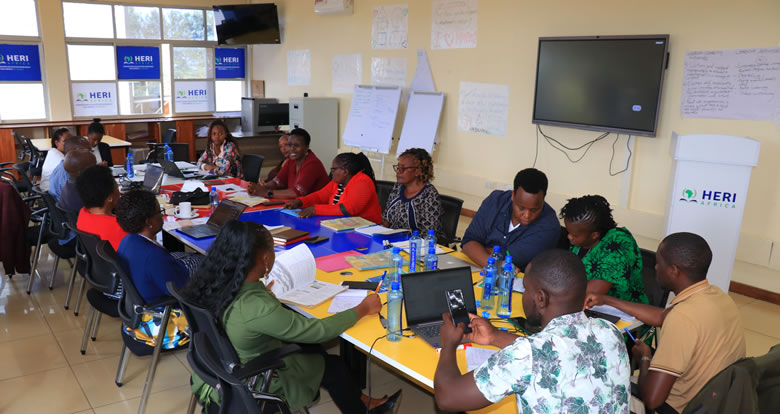





How can foundational mathematics become more practical, engaging and meaningful for young learners? This question was at the heart of a two-day teacher induction on mathematics clubs held from Wednesday 19 to Thursday 20 August 2026. The training was facilitated by the HERI Africa Research Chair in Mathematics Education, University of Embu.
The induction brought together teachers working with early-grade learners from schools in Tharaka, Kirinyaga, Embu and Meru counties. It provided an opportunity for teachers to learn, reflect and co-create practical approaches for strengthening foundational numeracy.
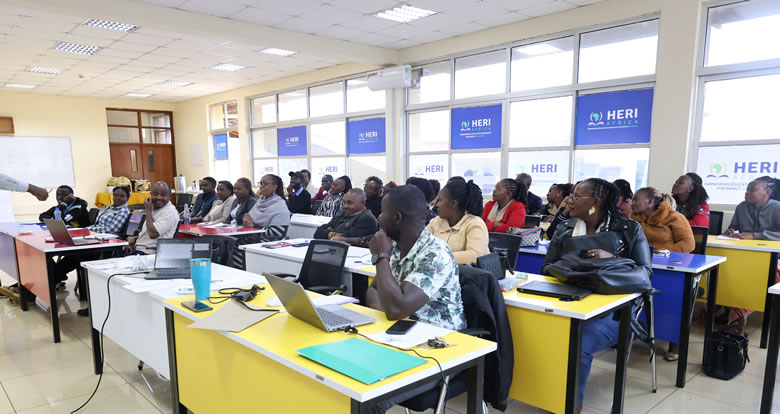
During the training, facilitators engaged teachers in a range of mathematics activities that encouraged them to think beyond traditional approaches to mathematics instruction. Teachers participated in the activities, solved mathematical problems, reflected on the mathematics activities they normally engage learners in and provided feedback on how these activities could be improved.
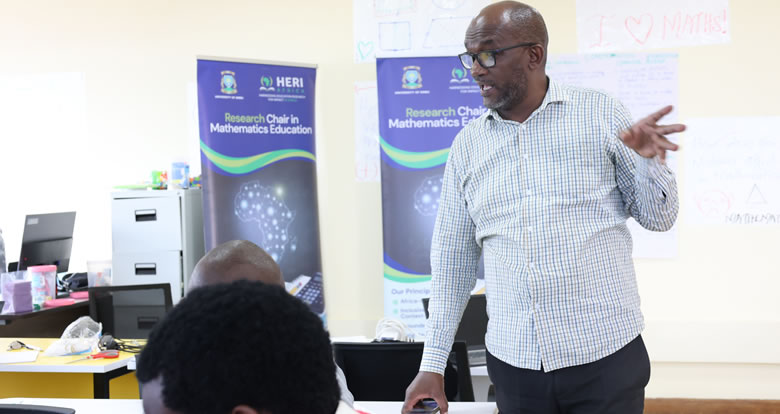
A key feature of the training was the co-creation of mathematics activities and teaching approaches. Working in groups, teachers used learning materials to represent mathematical concepts and demonstrated how they would guide young learners through different mathematical tasks. By manipulating materials and exploring different representations, teachers experienced how complex or abstract mathematical ideas can be made more concrete and easier for children to understand.
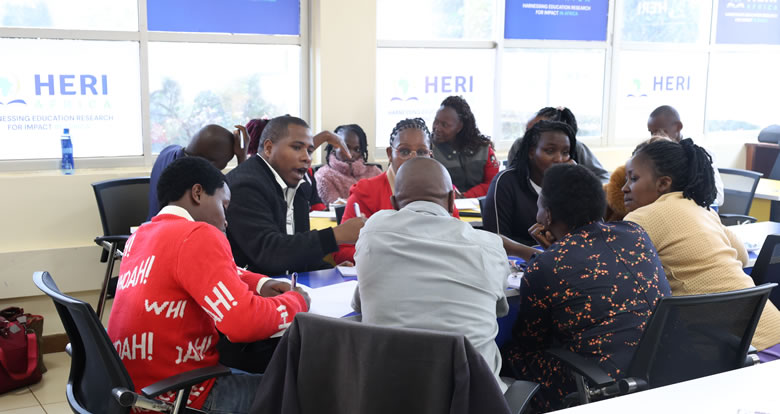
The training also provided an important platform for peer learning. Teachers shared experiences from teaching mathematics in the lower grades and exchanged ideas on how locally available materials can be used to support mathematics learning. They were encouraged to generate their own ideas for helping learners solve mathematical problems and to consider how practical activities can make mathematics more enjoyable and meaningful.
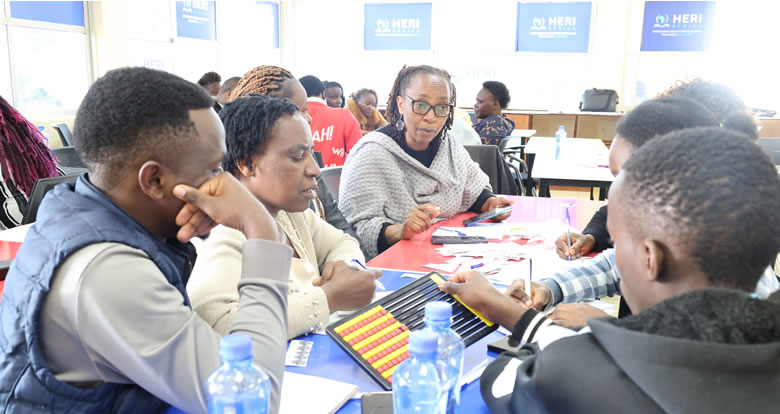
The Research Chair, Dr. Simon Karuku, guided teachers on how to sustain mathematics club activities in their respective schools. The clubs provide opportunities for learners to engage with mathematics through practical activities, problem-solving, games and collaborative learning beyond routine classroom lessons.
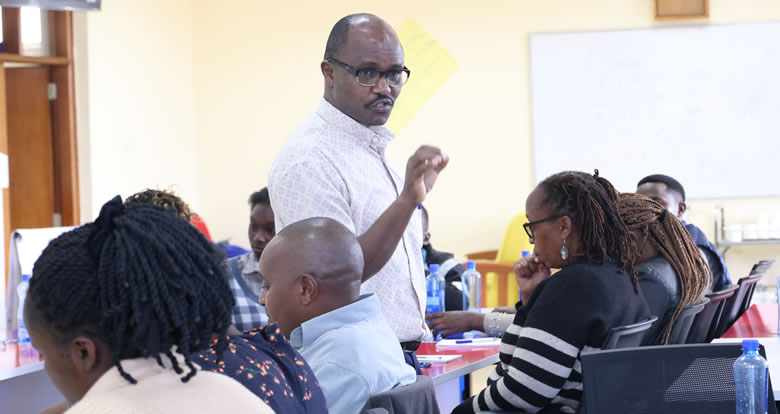
Prof. Ciriaka Gitonga emphasised the important role of HERI Africa and teachers in strengthening foundational learning. She highlighted the need to empower teachers with practical knowledge, resources and approaches that respond to the needs of young learners.
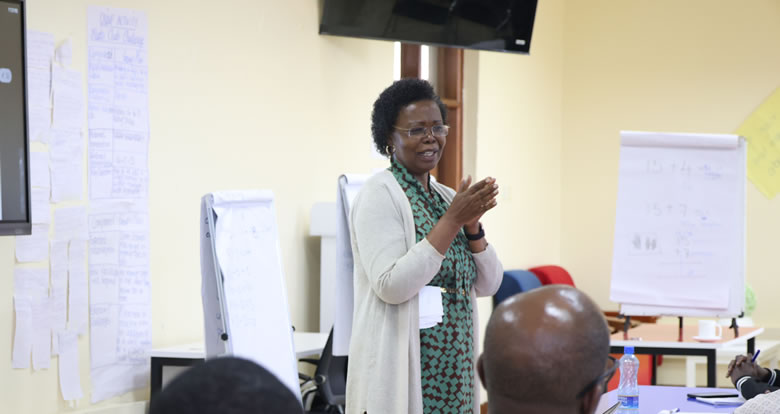
Participants were also introduced to a system for uploading mathematics club activities. The system will support the ongoing research and development activities of the Numeracy Initiative by enabling the documentation and sharing of activities undertaken in schools, while supporting continued teacher capacity building.
The two-day engagement demonstrated the value of creating opportunities for teachers to experiment, collaborate and learn from one another. It also reinforced the importance of using practical and locally available resources to help young learners develop stronger mathematical understanding.
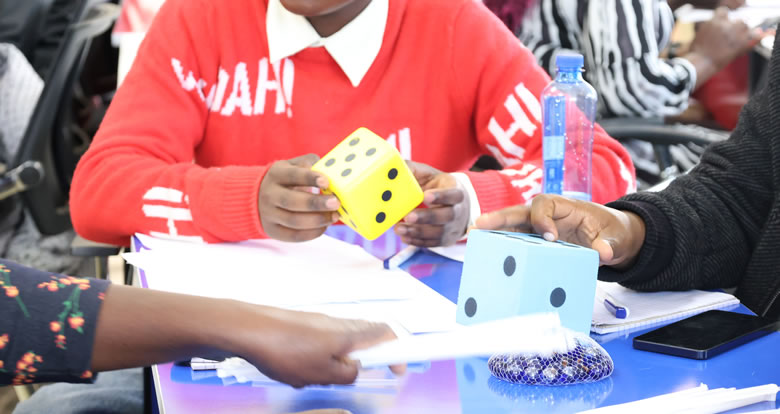
The central message from the training was clear: when teachers learn together, experiment together and share their experiences, they create better opportunities for children to learn mathematics with confidence, understanding and enthusiasm.