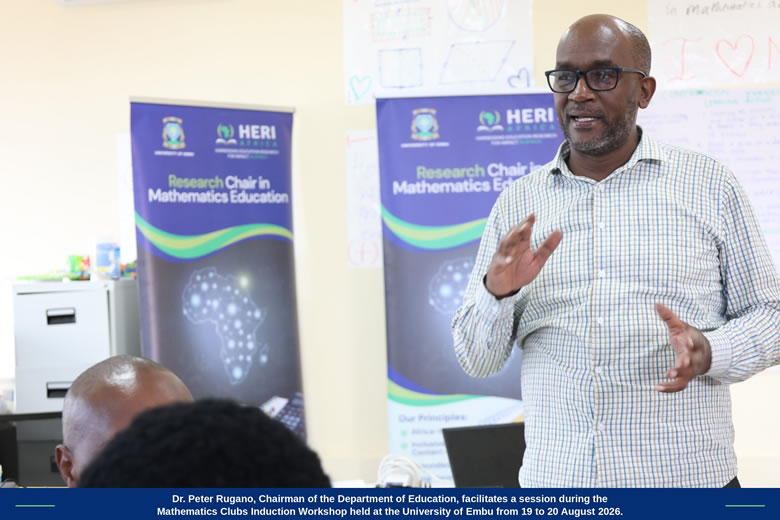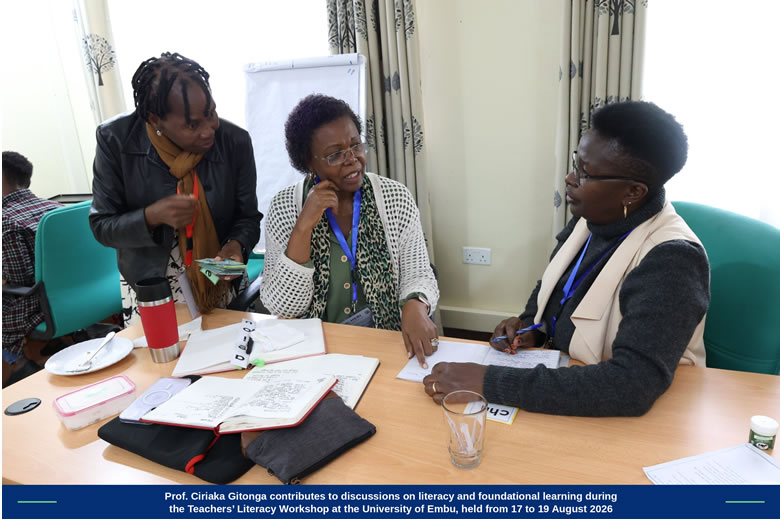





How well a learner reads, understands language, communicates ideas and interprets information can influence how they engage with mathematics. Recognising this connection, a research team led by Dr. Ruth Ndung’u, working under the Research Chair in Mathematics Education at the University of Embu, is investigating the relationship between literacy and numeracy.
The initiative seeks to generate evidence on how strengthening literacy skills can contribute to improved learning of mathematics, particularly at the foundational level. The work is based on the understanding that mathematics learning does not take place independently of language. Learners need language to understand instructions, interpret mathematical problems, explain their reasoning, communicate solutions and make meaning of mathematical concepts.
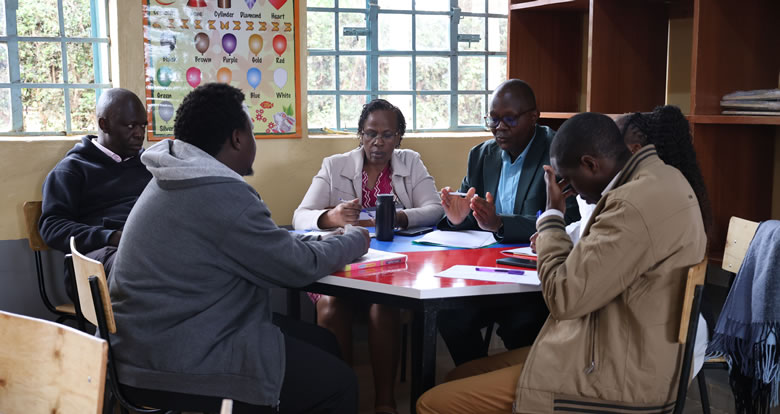
As part of this work, the research team has been collaborating with teachers at Kangaru DEB Primary School. From Tuesday, 1 September to Friday, 4 September 2026, the team conducted classroom observations and engaged with teachers and learners to gain a deeper understanding of the teaching and learning environment and the factors that shape foundational literacy and numeracy.
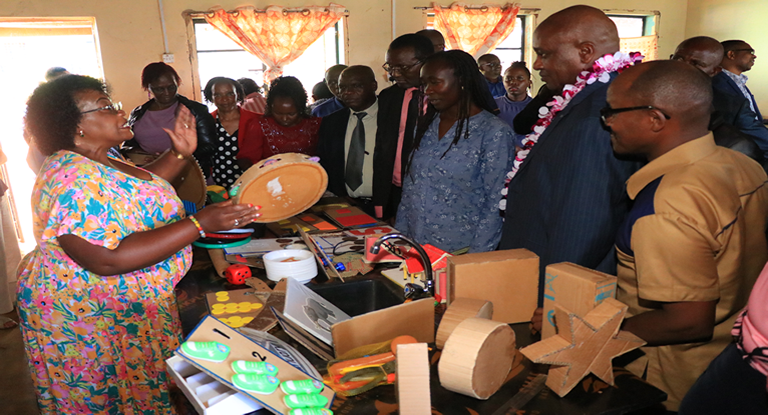
The classroom observations examined several aspects of the learning environment, including teaching practices, teacher-learner interactions, learner engagement, classroom organisation, and curriculum implementation. Particular attention was given to how teaching and learning resources were utilized to facilitate the teaching and understanding of concepts in English and mathematics. Understanding how teachers use available materials can provide insights into the extent to which mathematics learning is made practical, interactive and accessible to learners.
The team also explored factors that affect teachers’ ability to deliver effective literacy instruction, including the challenges they encounter, their access to capacity-building opportunities and the support available to them. These issues are important to understanding the broader classroom conditions within which literacy and numeracy are taught and learned.
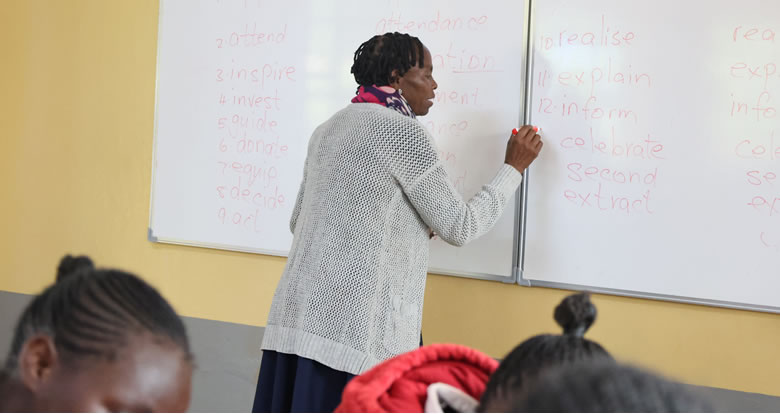
A key component of the engagement involved direct interaction with learners. On Friday, the research team, together with the teacher, engaged learners in a range of activities designed to assess and better understand their literacy abilities.

The learners participated in activities involving reading aloud, speaking, writing, generating words, and demonstrating comprehension of written and spoken English. These activities provided opportunities for the team to observe learners’ confidence, participation, communication skills and levels of understanding of the English language.
These observations and learner activities form part of the broader effort to understand how literacy can serve as a pathway to strengthening numeracy and foundational learning. A learner who struggles to understand the language used in a mathematical problem, for example, may find it difficult to demonstrate their mathematical knowledge even when they possess the underlying mathematical skills.
The relationship works both ways. As learners engage with mathematical ideas, they are also required to read, interpret information, communicate their reasoning and use language to explain how they arrive at solutions. Strengthening these interconnected skills may therefore contribute to more meaningful and effective foundational learning.
By examining literacy and mathematics together, the research team hopes to identify practical approaches that can support teachers in addressing these interconnected areas of learning.
The engagement at Kangaru DEB Primary School therefore goes beyond observing literacy instruction in isolation. It seeks to understand how classroom environments, teacher practices, learner characteristics, instructional resources and language skills interact to shape mathematics learning.
Ultimately, the research seeks to generate evidence that can help strengthen classroom practice and contribute to better outcomes in foundational literacy and numeracy, particularly among learners in the early grades.