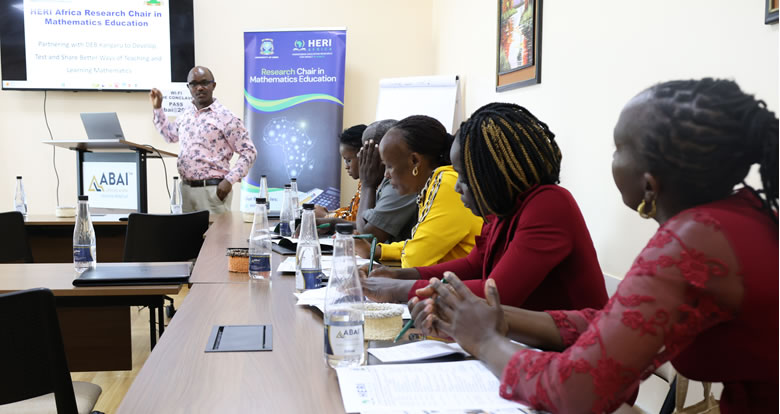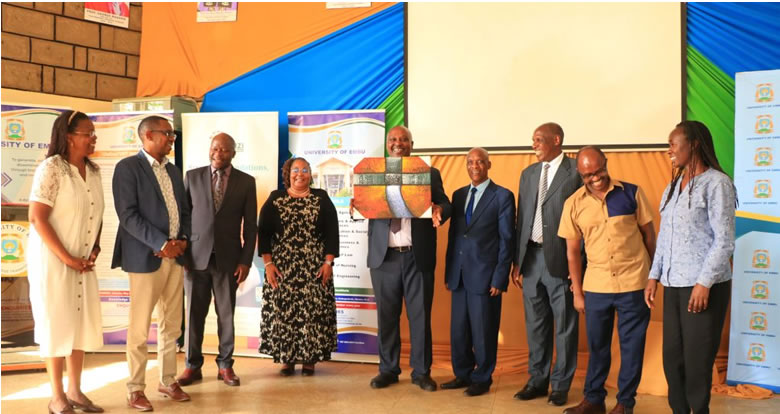





Mathematics Club monitoring visits across primary schools in Kirinyaga, Tharaka Nithi, Meru and Embu Counties have highlighted the growing potential of activity-based and learner-centred approaches to strengthening foundational numeracy.
The visits were led by HERI Africa Research Chair in Mathematics Education, Dr. Simon Karuku, and provided an opportunity to observe Mathematics Club activities, engage with learners, interact with facilitators and teachers, distribute teaching and learning materials, and gather feedback to inform programme improvement and research dissemination.
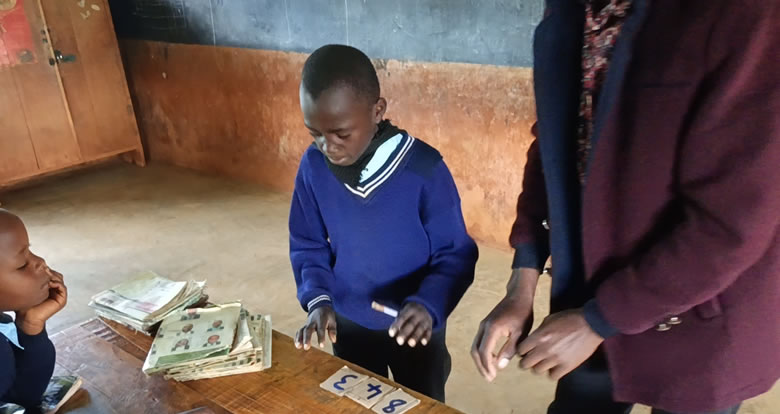
Across the four counties, the visits demonstrated that Mathematics Clubs are creating opportunities for learners to experience mathematics in engaging, practical and enjoyable ways. Through games, movement, group activities and locally developed learning resources, learners were encouraged to participate actively while developing important mathematical concepts and skills.
Engaging Learners Through Mathematics Games
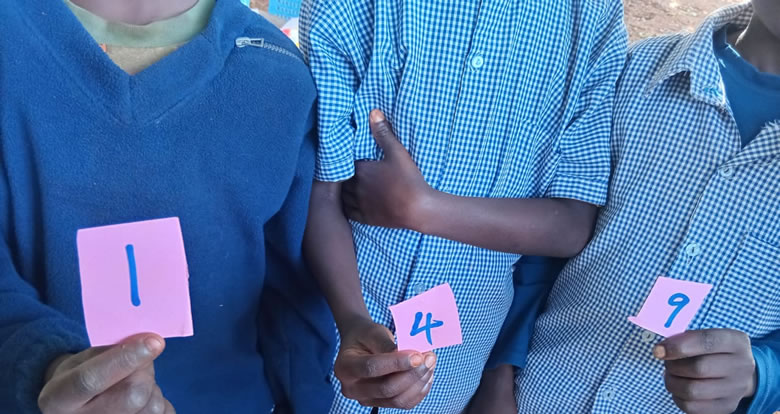
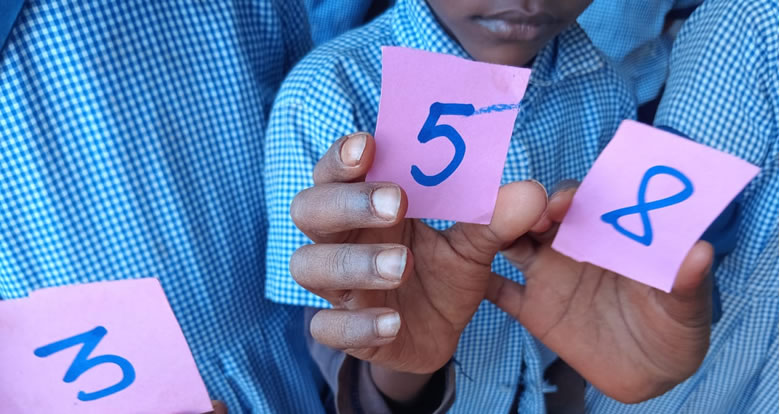
In Tharaka Nithi County, the monitoring visits demonstrated the value of interactive and game-based approaches to mathematics learning. At Rev. Ikingi Comprehensive School, learners participated in an activity involving number cards, where they identified the number needed to make a total of 10. The activity encouraged active participation and reinforced number relationships.
At Mbogoory Comprehensive School, the collaborating teacher reported that the mathematics games had contributed to improved learner engagement and had supported classroom instruction. The activities enabled the teacher to approach difficult topics more effectively.
At Karocho Comprehensive School, evidence of sustained Mathematics Club activity was visible through markings and drawings on the ground used for mathematical games. Learners participated enthusiastically in activities and demonstrated a willingness to engage with new mathematics games introduced during the visit.
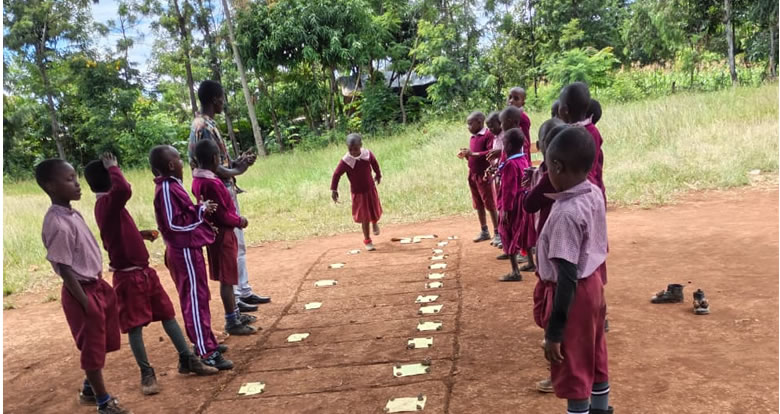
The visits also revealed creativity and innovation among facilitators and teachers. At Magundu Primary School, the facilitator and collaborating teacher worked together to organize learners and transition activities to the field, while specially prepared wooden hula hoops were used to support mathematics games.
At Kamatara Comprehensive School, the teacher had adapted the games to create additional opportunities for learner participation and varied learning experiences. These examples demonstrate how schools and facilitators are adapting Mathematics Club activities to suit their local contexts.
Innovation and Local Adaptation in Meru County
The visits in Meru County further demonstrated the importance of creativity and locally responsive implementation.
At Mariene Primary School, the facilitator had adapted and improvised activities and resources to suit the local context and the needs of learners. This reflected creativity, initiative and a strong commitment to learner engagement. However, the large number of learners presented a challenge in ensuring that every learner received adequate attention.
At Kiromwathi Primary School, learners enthusiastically participated in a mathematics game involving number patterns. The combination of play, physical movement and repetition created an enjoyable learning environment while reinforcing important mathematical concepts.
At Antubankui Primary School, strong instructional leadership was identified as an important factor in supporting foundational learning. School leadership actively supported the Mathematics Club and demonstrated a commitment to addressing learning gaps identified through the activities.
The visits also highlighted the importance of reliable communication and sustained facilitator engagement. At Mabuurua Primary School, the status of facilitation remained unresolved, demonstrating the vulnerability of school-based interventions when key implementers become unavailable without clear communication.
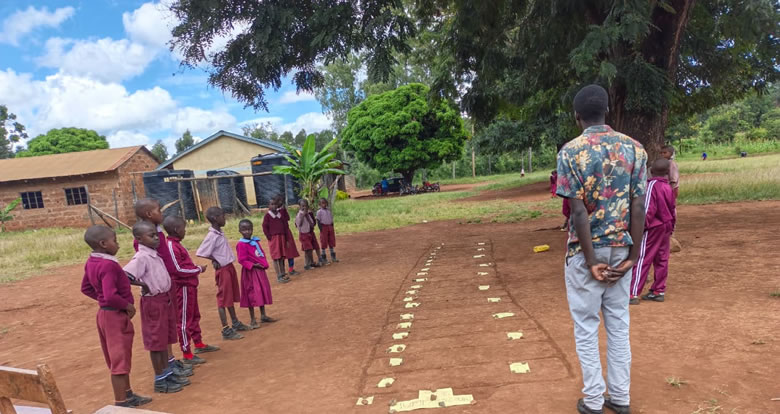
At Charuru Primary School, strong leadership and stakeholder commitment were evident. The school leadership actively supported the programme, advocated for its continuation and helped mobilize additional resources. The facilitator also demonstrated exceptional commitment by voluntarily engaging beyond the stipulated programme requirements.
Strengthening Foundational Numeracy in Embu County
The Embu County visits demonstrated how Mathematics Clubs are supporting activity-based learning in different school contexts.
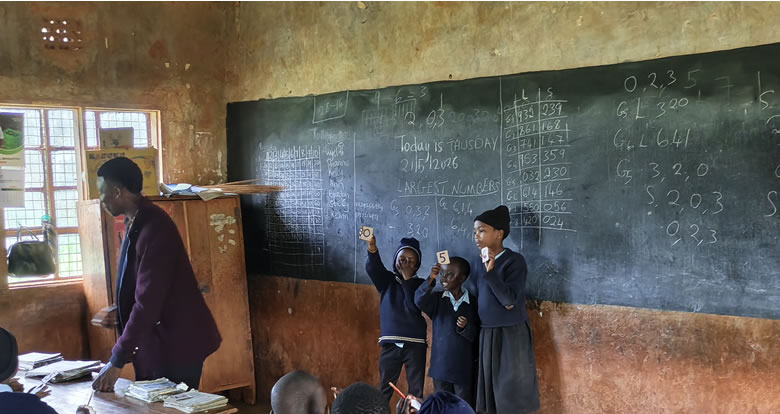
At Karau Primary School, a Mathematics Club lesson focused on place value and identifying the largest and smallest numbers. The facilitator, who was a former pupil of the school, also served as a positive role model for learners.
Similar activities focusing on place value were observed at Kathetu Primary School and St. Michael Kithimu Primary School. At St. Michael Kithimu, the facilitator used improvised cardboard flashcards and group activities to support learner participation in a class of 66 learners.
At St. Michael Kevote Primary School, learners participated in activities involving counting forward in sequences of 2s, 3s, 5s and higher multiples.

Where formal lesson observations were not possible, facilitators and teachers organized interactive sessions involving learners. These engagements provided opportunities to discuss foundational numeracy concepts and understand learners’ experiences with the Mathematics Club programme.
Learner Engagement and Facilitator Development
Across the counties, the Mathematics Club programme demonstrated considerable potential to strengthen both learner engagement and facilitator development.
Learners generally demonstrated enthusiasm and positive attitudes towards mathematics. The use of games, movement, group activities and locally available materials created opportunities for learners to engage with mathematics in ways that were different from conventional classroom instruction.
Facilitators also demonstrated professional growth through their involvement in the programme. The experiences strengthened skills in communication, confidence, patience, classroom practice and the adaptation of activities to different learner needs.
The visits showed that the effective implementation of Mathematics Clubs is strengthened when facilitators work closely with classroom teachers and school leadership. Such collaboration supports learner organization, improves activity implementation and helps connect Mathematics Club experiences with classroom learning.
Lessons for Programme Improvement
The monitoring visits generated important lessons for strengthening the Mathematics Club initiative.
Key strengths included high levels of learner engagement, facilitator commitment, teacher-facilitator collaboration, school leadership support and creative use of low-cost teaching and learning resources. At the same time, the visits highlighted challenges related to large class sizes, classroom management, learner diversity, accessibility, time constraints and the need for stronger inclusive teaching practices.
These experiences demonstrate the importance of continuous monitoring, communication and support for facilitators. Sustained engagement with schools and implementers will be essential in ensuring that Mathematics Clubs remain active and responsive to the needs of learners.
The visits also highlighted the value of allowing facilitators and schools some flexibility to adapt activities and resources to local contexts while maintaining the core objectives of the Mathematics Club programme.
The Mathematics Club monitoring visits across Kirinyaga, Tharaka Nithi, Meru and Embu Counties demonstrate the promise of innovative approaches to mathematics education.
From number games and mathematical sequences to place value activities and creative use of locally available resources, learners are being provided with opportunities to experience mathematics as an active, practical and enjoyable subject.
The commitment demonstrated by learners, facilitators, teachers and school leaders provides a strong foundation for the continued growth of the Mathematics Club initiative.
As HERI Africa continues to support research-informed approaches to education, the experiences documented through these monitoring visits will provide valuable insights for programme improvement, teacher development and research dissemination.
The Mathematics Club model demonstrates that meaningful improvements in mathematics learning can be supported when learners are actively engaged, facilitators are empowered to innovate, and schools and education stakeholders work together to create supportive learning environments.